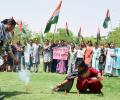
Opposition parties in India, including the Congress, Left parties, Samajwadi Party, Bahujan Samaj Party, Trinamool Congress, Dravida Munnetra Kazhagam, Rashtriya Janata Dal, Shiv Sena (UBT), and NCP (SP), have unanimously hailed the armed forces' "Operation Sindoor", a retaliatory strike against terrorist infrastructure in Pakistan and Pakistan-occupied Kashmir (PoK). The operation, which involved missile and drone strikes, was conducted in response to the April 22 Pahalgam terror attack. Despite political differences, all parties expressed support for the government and the armed forces, stressing the importance of national unity and integrity in the face of terrorism. While emphasizing the need for diplomatic avenues to prevent further escalation, some parties also called for caution in attributing political credit for the strikes.

Sharif, the three-time former premier, said that there is a need for all the political parties to sit together and form a government to pull Pakistan out of its difficulties.

Pakistan Prime Minister Shehbaz Sharif has once again thanked former US President Donald Trump for resolving the India-Pakistan conflict in May, despite India's consistent denial of third-party intervention.
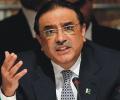
According to Mr Babar, within four days of this interview the Mumbai terror attack was underway, bringing the two countries closest to war in years -- 'The warmongers shattered Zardari's dream of peace with India'.
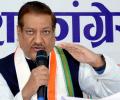
Why will I apologise? It is out of the question. The Constitution gives me the right to ask questions.

Funeral prayers were held for Bangladesh's former prime minister Khaleda Zia amid tight security. Millions joined the namaz-e-janaza of Zia, a three-time Prime Minister and political icon of Bangladesh.

RSS chief Mohan Bhagwat defended the organization's recognition and addressed concerns about respecting the Indian tricolour, responding to criticism from Congress leaders.
A family dispute between a Pakistani Hindu husband and wife, living in different countries after their marriage in 2020, has reached the Madhya Pradesh High Court after reconciliation attempts failed. The wife accuses the husband of planning a second marriage and seeks his deportation.
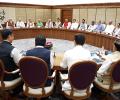
The diplomatic exercise aimed at presenting India's stance against Pakistan on terror comes in the wake of Operation Sindoor -- the Indian offensive against terror camps in Pakistan and Pakistan-occupied Kashmir following the April 22 terror attack in Pahalgam in which 26 people, mostly tourists, were killed.
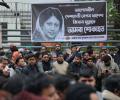
The funeral of Bangladesh's former prime minister Khaleda Zia will be held on Wednesday, and she will be buried with full state honors beside her husband, late president Ziaur Rahman.
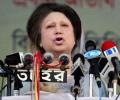
Khaleda Zia, Bangladesh's former first female prime minister and chairperson of the Bangladesh Nationalist Party, has died at the age of 80 after a prolonged illness.

The funeral prayer for former Bangladesh Prime Minister Khaleda Zia will be held on Wednesday in Dhaka. Foreign dignitaries are expected to attend.

Former Punjab Chief Minister Amarinder Singh criticizes the BJP's functioning, stating he is not being consulted. He rules out rejoining the Congress but expresses willingness to help Sonia Gandhi personally. He also discusses Punjab's political landscape, AAP's performance, and national security.

Interacting with the Indian diaspora in Kuala Lumpur, Banerjee said, "We have been in talks with them (Pakistan) for decades, despite changes in various paradigms and governments. But one thing remains constant, the conflict with Pakistan."

Union minister Giriraj Singh's controversial remarks regarding the 'naqab' incident in Bihar have drawn criticism from opposition leaders, escalating the political row.

For the first time since curfew was imposed three days ago in violence-hit Leh town of Ladakh, the restrictions were relaxed Saturday afternoon in a phased manner for a few hours, providing relief to residents who lined up outside shops selling essential commodities.

Assam Chief Minister Himanta Biswa Sarma has instructed police to register a treason case against Congress leaders for allegedly singing the Bangladesh national anthem at a party meeting. The move has sparked controversy and accusations of disrespect towards India's national anthem.

Sonam Wangchuk is under tight surveillance within the three-tiered prison, with CCTV cameras monitored around the clock.
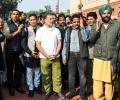
8 Member of Parliaments were suspended from Lok Sabha for tearing & throwing papers at the Chair till April 2. Uproar started when Rahul Gandhi was barred from citing former Army Chief, General M M Naravane's memoir on 2020 India-China clash. Rediff.com brings you the details of these MPs who were suspended.
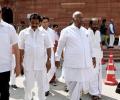
Leaders of 16 opposition parties demanded a special session of Parliament on Operation Sindoor in a letter to Prime Minister Narendra Modi as Indian National Developmental Inclusive Alliance (INDIA) parties held a meeting on the issue in the national capital on Tuesday.

The Supreme Court has questioned the NIA regarding the detention of Kashmiri separatist leader Shabir Ahmed Shah in a terror funding case, asking the agency to justify his detention for over six years.

'There is no substantive basis for Bangladesh-Pakistan relations. The only real link they can have is mischief, with Pakistan's intelligence agency using Bangladesh to create trouble along our eastern borders.'

Pakistan was created as a result of the 1947 Partition of then-undivided India, and the Sindh region near the river Indus has been part of Pakistan since then.
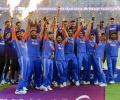
The Indian men ruled white-ball cricket, while South Africa ended decades of hurt by winning the World Test Championship at Lord's. Royal Challengers Bengaluru finally lifted their maiden IPL title, though the celebrations were dimmed by a deadly stampede. Above all, it was India's women who won a billion hearts by finally adding an ICC World Cup trophy to the cabinet.

Pakistan's former spy chief Faiz Hameed has been sentenced to 14 years in jail by a military court after being found guilty of violating the Official Secrets Act and engaging in political activities. This marks the first time a former ISI chief has been convicted.

This came after Pakistan People's Party chairman Bilawal Bhutto Zardari on Saturday stated that Pakistan's Prime Minister Shehbaz Sharif had tasked him to lead a delegation to present Pakistan's case on the recent escalations of tensions between the two nations.

Defence Minister Rajnath Singh lauded the armed forces' performance during Operation Sindoor, emphasizing the importance of technology and adaptability in modern warfare. He urged air force commanders to learn from the operation and stay prepared for future challenges.

Khan also insisted on protecting 'Form 45' to guard the people's mandate and expressed confidence over his victory, saying, "no force can defeat an idea whose time has come."
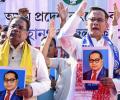
Senior Congress leader and former Rajya Sabha MP Ripun Bora was on Thursday questioned by Assam Police in connection with a case related to party colleague Gaurav Gogoi's alleged links with Pakistan, officials said.


The United States said it encourages 'direct communication' between India and Pakistan and commends Prime Minister Narendra Modi and Pakistan Prime Minister Shehbaz Sharif for choosing the path of peace.
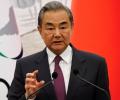
China on Tuesday called for a 'comprehensive and lasting ceasefire' between India and Pakistan, urging both countries to properly handle their differences through dialogue.
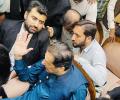
The Islamabad high court is set to hear the petitions requesting the suspension of sentences to Khan and his wife Bushra Bibi in the 190 million Pound Al-Qadir Trust case on June 11.
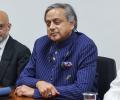
The problem in holding talks with Pakistan is not the language but finding a common vision for decency and peace, Congress MP Shashi Tharoor said on Tuesday, stressing that New Delhi can engage in dialogue with Islamabad if it takes significant action against the infrastructure of terrorism that is visible everywhere in the country.

The BJP on Saturday accused the Congress of repeatedly supplying "oxygen" to Pakistan, and slammed the opposition party for its leader Charanjit Singh Channi's remarks questioning the veracity of Balakot air strikes after the 2019 Pulwama terror attack. BJP national spokesperson Sambit Patra alleged that the Congress is full of pro-Pakistan leaders who make statements against India's interests, and mocked the party for its letter that had advised its functionaries to toe the official line on the issue. Patra also criticized other Congress leaders for their comments on the Pulwama and Pahalgam terror attacks, accusing them of lowering the morale of the armed forces. He further slammed the Congress for claiming credit for the government's announcement of the caste census and said the party never carried out the exercise during its over 60-year stint in power.
Imran Khan's sister claims he is alive but facing mental torture in solitary confinement at Adiala Jail. Concerns arose after an unannounced ban on family visits, leading to social media speculation about his well-being. The government has imposed Section 144 and deployed police to prevent PTI protests.

Union Home Minister Amit Shah on Friday said the victory of the Bharatiya Janata Party-led National Democratic Alliance in the Bihar polls was a mandate against infiltrators in the country because citizens will never favour those parties that support such illegal immigrants.

'And then the people who call themselves great nationalists, I can bet you that 99 per cent of them are dodging taxes, have sent their kids to America, or are doing everything to make sure that what goes on in this country doesn't affect their personal wealth or their whatever bull*&$%.'
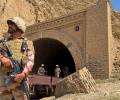
'Neither are Baloch insurgents capable of breaking up Pakistan, nor has Pakistan learned any lessons from the 1971 debacle that led to the country's dismemberment.'
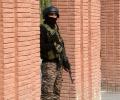
Authorities in Kashmir have initiated a profiling process of mosques, madrassas, and individuals associated with their management following the exposure of a 'white collar' terror module. The enumeration drive focuses on the finances of these institutions and the backgrounds of their personnel.
